
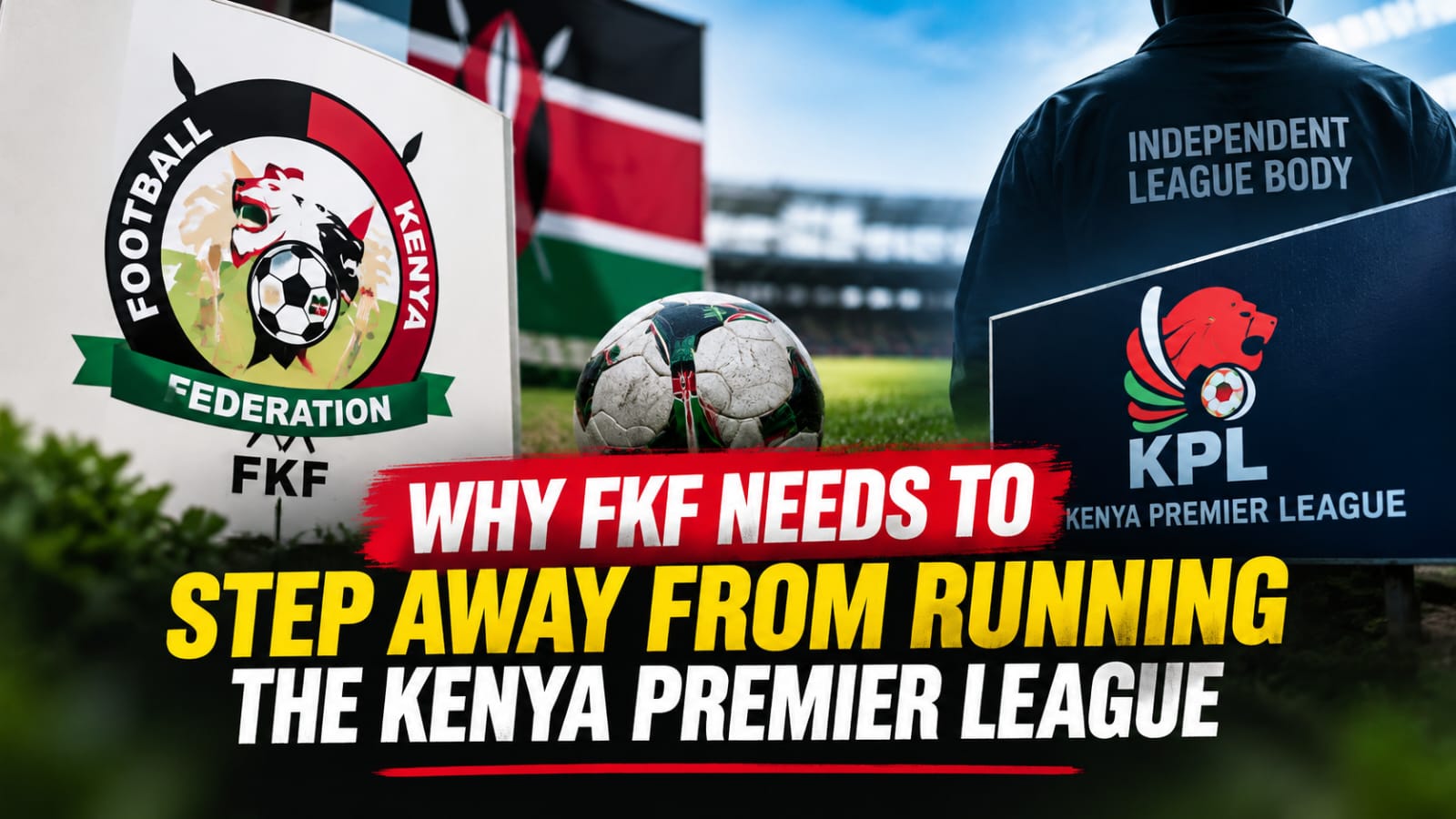
This is where I believe Kenya has gone wrong in recent years.
When I started following the Kenyan Premier League at a young age, our football was far from perfect. There were challenges, but the league had a structure that seemed to work. The Kenya Premier League (KPL), under the then CEO Jack Oguda, was responsible for running the competition, while the federation focused on its broader regulatory responsibilities.
Those, in my view, were some of the better years for Kenyan football.
Clubs were receiving significantly more financial support than they do today, with SuperSport serving as the league's main broadcasting partner. The commercial value and visibility of the league were also growing, giving clubs a stronger platform to attract sponsors and build their brands.
Fast-forward about a decade, and the situation is very different.
The league is now run under the federation, while clubs continue to struggle financially, with reports of clubs receiving considerably less in monthly allocations than they did during the KPL era.
Posta Rangers head coach Zedekiah 'Zico' Otieno, one of the most experienced coaches in Kenyan football, has described the current state of the game as unfair to players, coaches and even fans.
Speaking about the federation's decision to take over the running of the league, Zico posed an important question:
"We can go back and stock take when KPL was running the league and when FKF decided to take over. Which period did the league stabilize?"
That is a question Kenyan football stakeholders need to confront honestly.
Across many established footballing nations, federations act primarily as regulators and custodians of the game, while professional leagues operate with a degree of independence and focus on the commercial and administrative running of their competitions.
As Zico put it:
"Federations are interested parties and cannot run the league."
The current situation in Kenya has raised even more questions about the structure and management of our football. The FKF Premier League has been caught up in court battles and disputes involving the federation and other interested parties, with the latest developments even affecting the commencement of the season.
And when the start of a league can be thrown into uncertainty because of administrative and legal disputes, it is the players, coaches, clubs, sponsors and, ultimately, the fans who pay the price.
This is not an argument against FKF. The federation has an important role to play in Kenyan football. It should regulate the game, enforce the rules, protect the interests of clubs and players, develop football at all levels and ensure that competitions meet the required standards.
But perhaps it is time to ask whether running the country's top professional league should be one of those responsibilities.
My personal opinion is that the FKF Premier League would benefit from an independent league management structure, similar to what we had during the KPL era. An independent body could focus entirely on the commercial, administrative and operational aspects of the league, while FKF maintains its role as the regulator and governing body.
Kenyan football needs stability, professionalism, commercial growth and proper structures.
Until we seriously address how our top-flight league is governed and managed, we risk continuing down the same path of uncertainty, financial struggles and endless disputes.
Related Articles
More in Sports


Comments (0)
Leave a Comment
Comments are moderated and will appear after approval.